Registered Charity Number: 1107139
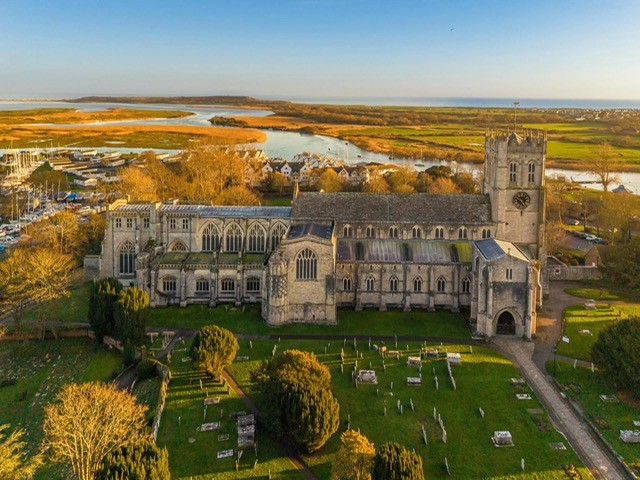
As with all historic buildings there is a cost involved in maintaining its fabric. In the past few years over one million pounds has been spent restoring and conserving the Tower, North Porch, the exterior of the North Nave Aisle and North Transept, transforming it to its former glory. The work that has been completed was very necessary, coming some one hundred and fifty years after the last restoration was carried out. We are grateful to the generosity of past worshippers and parishioners whose financial gifts have enabled us to complete this work.
But more restoration work is urgently required on the exterior of the North Quire Aisle, flying buttresses, windows and Lady Chapel so that the stone work on the north elevation of the Priory may be completed.
We do not receive any money from the Government or the Church Commissioners. It is, therefore, the community’s responsibility to make sure that this sacred space in the centre of our community remains a beacon of hope to our residents and all who visit Christchurch. Our challenge is to pass on to future generations a building that is in a better state of repair than when we received it. We have done a great deal, but much more is needed.
The Trust has been set up in order to help cater for immediate urgently needed work, as well as for the future conservation works to the fabric of Christchurch Priory.
If you would like to donate funds to help the Trust in its work there are several ways you can donate:-
- by placing a donation in the Conservation Trust collection table in the Church
- by sending a cheque made payable to the Christchurch Priory Building Conservation Trust c/o The Vestry
- or by setting up a a Standing Order donation.
Please see the Trust Leaflet for further details. These can be found on the Conservation Trust Table which is located at the West End of the church.
In 2024, Historic England included Christchurch Priory among 31 sites in the South West on its ‘At Risk’ register, which gives an annual snapshot of the health of England’s valued historic buildings and places. It helps to ensure they can be protected and continue to be enjoyed in the future.
Simon Hickman of Historic England writes
“The late medieval roof structure, hidden behind a 19th century plasterwork ceiling, retains original and highly significant painted decoration, but is in deteriorating condition with substantial repairs needed…. The congregation have prepared a masterplan to address the necessary repairs and provide new and improved facilities and are in the process of identifying sources of funding.”
from https://historicengland.org.uk/advice/heritage-at-risk/search-register/list-entry/13100
The photographs above (by Ross Cook) show some of these roof paintings.
The statement issued by Historic England says:
One of the longest parish churches in England requires repairs to its late medieval roof.
Christchurch Priory as we see it today was built from the 1090s on the site of a Saxon Priory and completed by around 1150. Additions to the Norman church, including the late Gothic Lady Chapel, the ornate Tudor Salisbury Chantry, and the West Tower, were made before Henry VIII granted the building to the people of Christchurch in 1540 and declared that it should be used as their parish church in perpetuity.
As a large former monastic building, Christchurch Priory is considered one of approximately 300 ‘major’ parish churches by the Church of England, which face a different scale of opportunities and threats compared to most listed church buildings. The upkeep and repair of these buildings pose a significant challenge and the responsibility falls entirely on the local community.
Major repairs including to the Lady Chapel, external stonework and internal plasterwork have been completed in recent years, but now the late 14th/early 15th century wooden roof of the main church needs urgent repairs. Notable for its spectacular, but hidden, late medieval painted timberwork, the roof would originally have been visible from the nave floor before a plaster ceiling was installed in the early 19th century.
Historic England
- has dedicated toolkits on its website for Heritage at Risk and Caring for Heritage and provides expert advice to owners, local authorities and communities.
- works creatively with owners and communities to deliver new visions for how these historic places can be used again and can provide grant aid.
- supports communities to come together, connecting interested parties to raise awareness and additional funds.